Pensum -10%
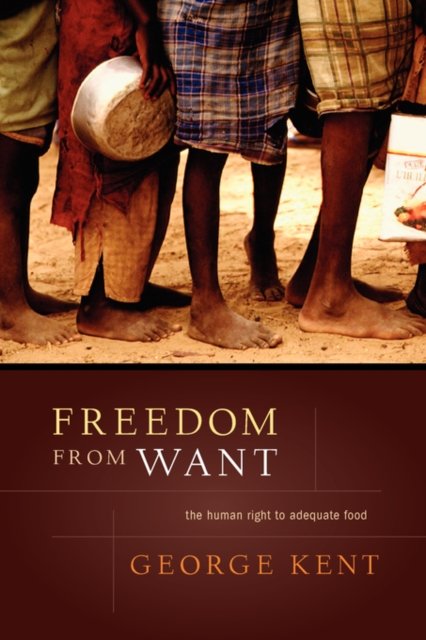
Av George Kent, 2005.Del av serien Advancing Human Rights series.
The Human Right to Adequate Food
This is both a descriptive and normative argument that worldwide hunger is best addressed as a human rights issue. Kent analyzes the current deplorable state of world hunger and malnutrition, demonstrating how governments, not food shortages or climates or famine, are to blame. But he is not claiming that governments must begin handing out bags of rice to solve the problem. Rather, adequate food as a human right requires that governments provide the resources and freedom to allow individuals and communities to provide for themselves. Seen this way, the human right to adequate food is an aspiration, a goal, requiring concrete and customized action plans to deal with wide varieties of communities. As he makes this argument Kent examines U.N. statements on human rights and how they address food; accountability mechanisms; the mixed records of how such countries as India, Brazil, and the U.S. have handled hunger; and feeding infants and refugees. One particularly provocative chapter concerns children born to mothers with HIV. Do these children have a right to be breastfed by their mothers? Or do health risks override rights claims for nutrition? The manuscript includes numerous tables and illustrations, as well as a bibliographic essay. Includes a foreword by Jean Ziegler, UN secial rapporteur on the right to food.
Ikke tilgjengelig for Klikk&Hent
Midlertidig tomt på lager
Bestillingsvare. Forventes sendt om ca 10 dager
Av George Kent, 2005.Del av serien Advancing Human Rights series.
The Human Right to Adequate Food
This is both a descriptive and normative argument that worldwide hunger is best addressed as a human rights issue. Kent analyzes the current deplorable state of world hunger and malnutrition, demonstrating how governments, not food shortages or climates or famine, are to blame. But he is not claiming that governments must begin handing out bags of rice to solve the problem. Rather, adequate food as a human right requires that governments provide the resources and freedom to allow individuals and communities to provide for themselves. Seen this way, the human right to adequate food is an aspiration, a goal, requiring concrete and customized action plans to deal with wide varieties of communities. As he makes this argument Kent examines U.N. statements on human rights and how they address food; accountability mechanisms; the mixed records of how such countries as India, Brazil, and the U.S. have handled hunger; and feeding infants and refugees. One particularly provocative chapter concerns children born to mothers with HIV. Do these children have a right to be breastfed by their mothers? Or do health risks override rights claims for nutrition? The manuscript includes numerous tables and illustrations, as well as a bibliographic essay. Includes a foreword by Jean Ziegler, UN secial rapporteur on the right to food.
Ikke tilgjengelig for Klikk&Hent
Midlertidig tomt på lager
Bestillingsvare. Forventes sendt om ca 10 dager
Ved å fullføre kjøpet aksepterer du kjøpsvilkårene.