
The EU Social Market Economy and the Law
Delia Ferri, Fulvio Cortese
PocketEngelsk
Del av serien Routledge Research in EU Law
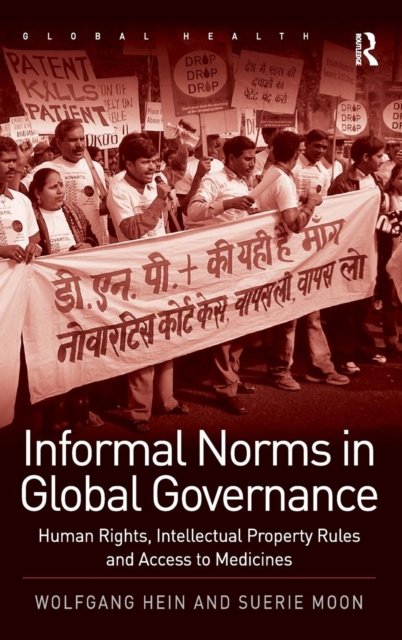
Av Suerie Moon, Wolfgang Hein, 2013.Del av serien Routledge Global Health Series.
Human Rights, Intellectual Property Rules and Access to Medicines
Hein and Moon take up a serious problem of contemporary global governance: what can be done when international trade rules prevent the realization of basic human rights? Starting in the 1990s, intellectual property obligations in trade agreements required many developing countries to begin granting medicines patents, which often rendered lifesaving drugs unaffordable. At stake was the question of what priority would be given to health-particularly of some of the world?s poorest people-and what priority to economic interests, particularly those of the most powerful states and firms. This book recounts the remarkable story of the access to medicines movement. The authors offer an explanation for how the informal, but powerful norm that every person should have access to essential medicines emerged after a decade of heated political contestation and against long odds. They also explore the stability and scope of the norm. Finally, the book examines the limitations of informal norms for protecting human rights, and when renewed focus on changing formal norms is warranted.
Språk: Engelsk
Ikke tilgjengelig for Klikk&Hent
Midlertidig tomt på lager
Bestillingsvare. Forventes sendt om ca 10 dager
Av Suerie Moon, Wolfgang Hein, 2013.Del av serien Routledge Global Health Series.
Human Rights, Intellectual Property Rules and Access to Medicines
Hein and Moon take up a serious problem of contemporary global governance: what can be done when international trade rules prevent the realization of basic human rights? Starting in the 1990s, intellectual property obligations in trade agreements required many developing countries to begin granting medicines patents, which often rendered lifesaving drugs unaffordable. At stake was the question of what priority would be given to health-particularly of some of the world?s poorest people-and what priority to economic interests, particularly those of the most powerful states and firms. This book recounts the remarkable story of the access to medicines movement. The authors offer an explanation for how the informal, but powerful norm that every person should have access to essential medicines emerged after a decade of heated political contestation and against long odds. They also explore the stability and scope of the norm. Finally, the book examines the limitations of informal norms for protecting human rights, and when renewed focus on changing formal norms is warranted.
Språk: Engelsk
Ikke tilgjengelig for Klikk&Hent
Midlertidig tomt på lager
Bestillingsvare. Forventes sendt om ca 10 dager
Ved å fullføre kjøpet aksepterer du kjøpsvilkårene.











The Political Economy of AIDS in Africa
728,-

AIDS and Governance
729,-

The Politics of Surveillance and Response to Disease Outbreaks
749,-
Decentralization and Health Policy in South Asia
1 929,-
Illicit Medicines in the Global South
528,-
Civil Society Organizations and the Global Response to HIV/AIDS
649,-

Migrant Health and Resilience
649,-
Rethinking Sexual and Reproductive Health and Rights for Young Women in Southern Africa
498,-
The Political Economy of Pharmaceutical Patents
749,-

Global Population Policy
679,-
The Political Economy of AIDS in Africa
728,-
AIDS and Governance
729,-
The Politics of Surveillance and Response to Disease Outbreaks
749,-
Decentralization and Health Policy in South Asia
1 929,-
Illicit Medicines in the Global South
528,-
Civil Society Organizations and the Global Response to HIV/AIDS
649,-
Migrant Health and Resilience
649,-
Rethinking Sexual and Reproductive Health and Rights for Young Women in Southern Africa
498,-
The Political Economy of Pharmaceutical Patents
749,-
Global Population Policy
679,-