Energy Transition in the Baltic Sea Region
Farid Karimi, Michael Rodi
PocketEngelsk
Del av serien Routledge Studies in Energy Transitions
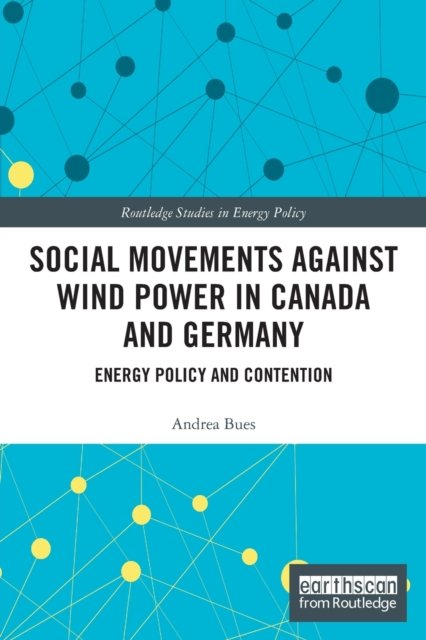
Av Andrea Bues, 2022.Del av serien Routledge Studies in Energy Policy.
Energy Policy and Contention
Taking a comparative case study approach between Canada and Germany, this book investigates the contrasting response of governments to anti-wind movements.
Environmental social movements have been critical players for encouraging the shift towards increased use of renewable energy. However, social movements mobilizing against the installation of wind turbines have now become a major obstacle to their increased deployment. Andrea Bues draws on a cross-Atlantic comparative analysis to investigate the different contexts of contentious energy policy. Focusing on two sub-national forerunner regions in installed wind power capacity ? Brandenburg and Ontario ? Bues draws on social movement theory to explore the concept of discursive energy space and propose explanations as to why governments respond differently to social movements. Overall, Social Movements against Wind Power in Canada and Germany offers a novel conceptualization of discursive-institutional contexts of contentious energy politics and helps better understand protest against renewable energy policy.
This book will be of great interest to students and scholars of renewable energy policy, sustainability and climate change politics, social movement studies and environmental sociology.
Språk: Engelsk
Ikke tilgjengelig for Klikk&Hent
Midlertidig tomt på lager
Bestillingsvare. Forventes sendt om ca 8 dager
Av Andrea Bues, 2022.Del av serien Routledge Studies in Energy Policy.
Energy Policy and Contention
Taking a comparative case study approach between Canada and Germany, this book investigates the contrasting response of governments to anti-wind movements.
Environmental social movements have been critical players for encouraging the shift towards increased use of renewable energy. However, social movements mobilizing against the installation of wind turbines have now become a major obstacle to their increased deployment. Andrea Bues draws on a cross-Atlantic comparative analysis to investigate the different contexts of contentious energy policy. Focusing on two sub-national forerunner regions in installed wind power capacity ? Brandenburg and Ontario ? Bues draws on social movement theory to explore the concept of discursive energy space and propose explanations as to why governments respond differently to social movements. Overall, Social Movements against Wind Power in Canada and Germany offers a novel conceptualization of discursive-institutional contexts of contentious energy politics and helps better understand protest against renewable energy policy.
This book will be of great interest to students and scholars of renewable energy policy, sustainability and climate change politics, social movement studies and environmental sociology.
Språk: Engelsk
Ikke tilgjengelig for Klikk&Hent
Midlertidig tomt på lager
Bestillingsvare. Forventes sendt om ca 8 dager
Ved å fullføre kjøpet aksepterer du kjøpsvilkårene.











Constitutional Discussions on Nuclear Energy in Germany
649,-

Energy Policies and Climate Change in China
669,-

Constitutional Discussions on Nuclear Energy in Germany
2 129,-

Energy Policy in China
369,-
Making Electricity Resilient
679,-

Energy Security and Cooperation in Eurasia
679,-

Fossil Fuel Subsidy Reforms
669,-

Energy Policies and Climate Change in China
2 129,-

Governing Shale Gas
669,-

Wind Power and Public Engagement
649,-
Constitutional Discussions on Nuclear Energy in Germany
649,-
Energy Policies and Climate Change in China
669,-
Constitutional Discussions on Nuclear Energy in Germany
2 129,-
Energy Policy in China
369,-
Making Electricity Resilient
679,-
Energy Security and Cooperation in Eurasia
679,-
Fossil Fuel Subsidy Reforms
669,-
Energy Policies and Climate Change in China
2 129,-
Governing Shale Gas
669,-
Wind Power and Public Engagement
649,-