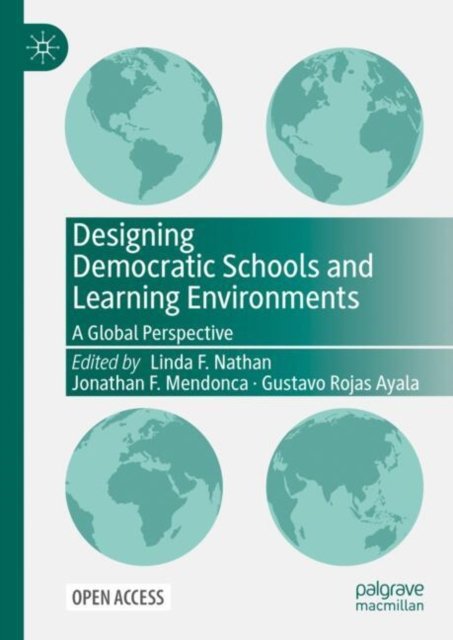
Designing Democratic Schools and Learning Environments
Redigert av Gustavo Rojas Ayala, Linda F. Nathan, Jonathan F. Mendonca, 2024.
A Global Perspective
This open access book explores democratic schools and learning environments globally. The book focuses on a newly developed framework for democratic education. The authors describe existing schools and concept schools—those that are ideas but not in operation. The first section includes the editors’ own journeys. Pillar 1 includes schools that emphasize the open flow of ideas and choices, regardless of their popularity. Pillar 2 maintains that it is impossible to have a high quality education that ignores equity. Chapters explore how many diverse ‘marginalized’ communities experience education and some innovations that hold great promise for inclusion. Pillar 3 provides examples of schools where active engagement, consensus and compromise support the ‘common good.’ Pillar 4 investigates schools which organize students, parents, social institutions and the larger community collaboratively to achieve its goals and to solve theirs and society’s most urgent challenges.
Språk: Engelsk
Designing Democratic Schools and Learning Environments
Redigert av Gustavo Rojas Ayala, Linda F. Nathan, Jonathan F. Mendonca, 2024.
A Global Perspective
This open access book explores democratic schools and learning environments globally. The book focuses on a newly developed framework for democratic education. The authors describe existing schools and concept schools—those that are ideas but not in operation. The first section includes the editors’ own journeys. Pillar 1 includes schools that emphasize the open flow of ideas and choices, regardless of their popularity. Pillar 2 maintains that it is impossible to have a high quality education that ignores equity. Chapters explore how many diverse ‘marginalized’ communities experience education and some innovations that hold great promise for inclusion. Pillar 3 provides examples of schools where active engagement, consensus and compromise support the ‘common good.’ Pillar 4 investigates schools which organize students, parents, social institutions and the larger community collaboratively to achieve its goals and to solve theirs and society’s most urgent challenges.
Språk: Engelsk
Ved å fullføre kjøpet aksepterer du kjøpsvilkårene.